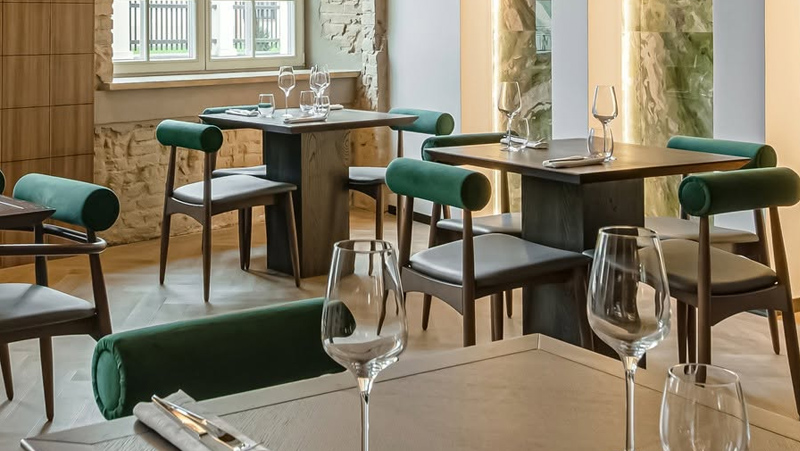
Common mistakes when furnishing a café
BRAVO komanda 2026-06-26 13:21:50
Common mistakes when furnishing a café: What to consider when choosing commercial furniture
Opening a new café usually starts with defining the interior concept, creating the menu, planning the lighting and developing the brand identity. Furniture selection often comes much later, once most of the budget has already been allocated. This is where many costly mistakes are made - mistakes that rarely become apparent during the opening, but instead after the first year of intensive operation.
Unlike residential furniture, café furniture is exposed to continuous daily use. Chairs are moved hundreds of times, tables are cleaned repeatedly throughout the day and heavy customer traffic quickly shows which furniture was designed for commercial environments and which was not. For this reason, choosing furniture for a café should involve much more than aesthetics. Durability, maintenance, ergonomics and long-term performance are equally important.
1. Choosing furniture based on appearance instead of purpose
Many café projects begin with inspiration images, mood boards, or social media references. Designers and owners often look for furniture that creates a striking visual impression. However, furniture that looks beautiful does not automatically perform well in a busy hospitality environment.
One of the most common mistakes is selecting residential furniture for a commercial project. Furniture designed for homes is built for entirely different usage conditions than furniture intended for restaurants, cafés or other HoReCa venues. A chair used only a few times a day in a home may be occupied by hundreds of different guests during a single weekend in a café.
As a result, structural issues often appear first. Lightweight frames may become loose, joints begin to move, upholstery wears prematurely and table tops become vulnerable to scratches, moisture and heat. In addition, many residential furniture manufacturers do not provide warranty coverage when their products are used in commercial environments.
Recommendation: Choose furniture based on how it will perform after several years of intensive use - not simply how it looks on opening day. Contract furniture and commercial furniture for public spaces are specifically engineered for high-traffic environments, with durable construction, commercial-grade materials and finishes designed for everyday hospitality use.
 2. Underestimating furniture maintenance
Every piece of furniture looks perfect on opening day. The real test begins after several months of operation.
Light-coloured upholstery, textured fabrics and difficult to clean materials quickly absorb coffee, wine and food stains. Furniture with complex shapes also tends to collect dust and crumbs, making cleaning more time-consuming.
Over time, this results in higher maintenance costs and increased workload for staff.
Recommendation: When selecting café chairs or upholstered furniture, pay close attention to stain resistance, ease of cleaning and how the furniture will look after years of daily use, not just during the first weeks after installation.
3. Choosing the wrong table tops
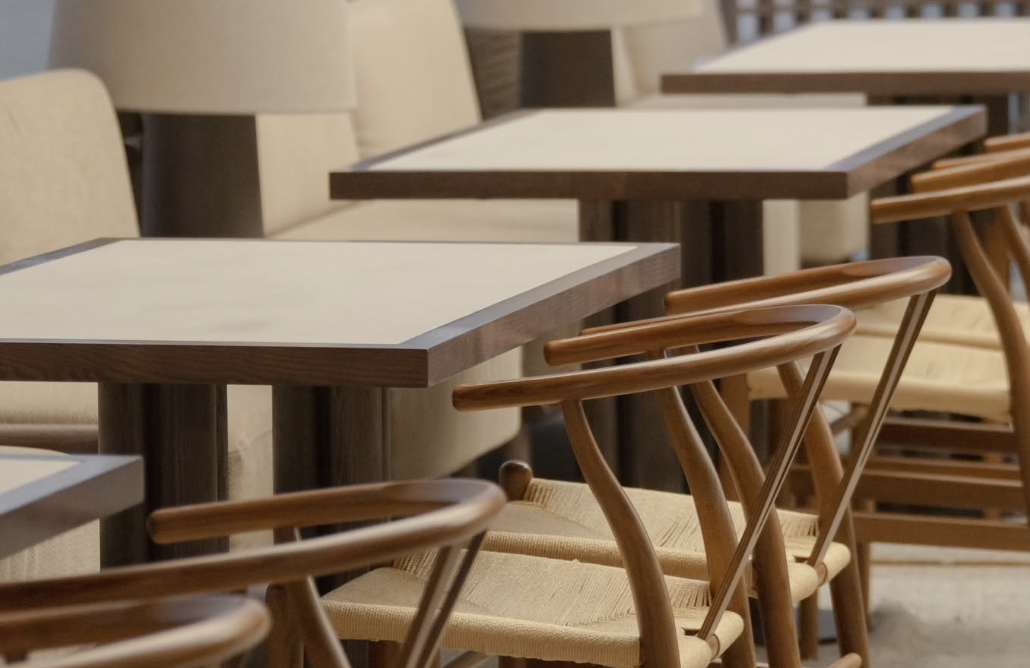
Table tops are among the hardest-working elements in any café. Every day they are exposed to hot cups, cleaning chemicals, moisture, heavy tableware and constant movement of objects.
If the surface material is not intended for commercial use, scratches, stains, swelling or premature wear can appear surprisingly quickly.
Recommendation: When selecting café tables, consider much more than colour or texture. Evaluate resistance to heat, moisture, cleaning chemicals, abrasion and daily maintenance to ensure long-term durability.
 4. Ignoring customer and staff traffic flow
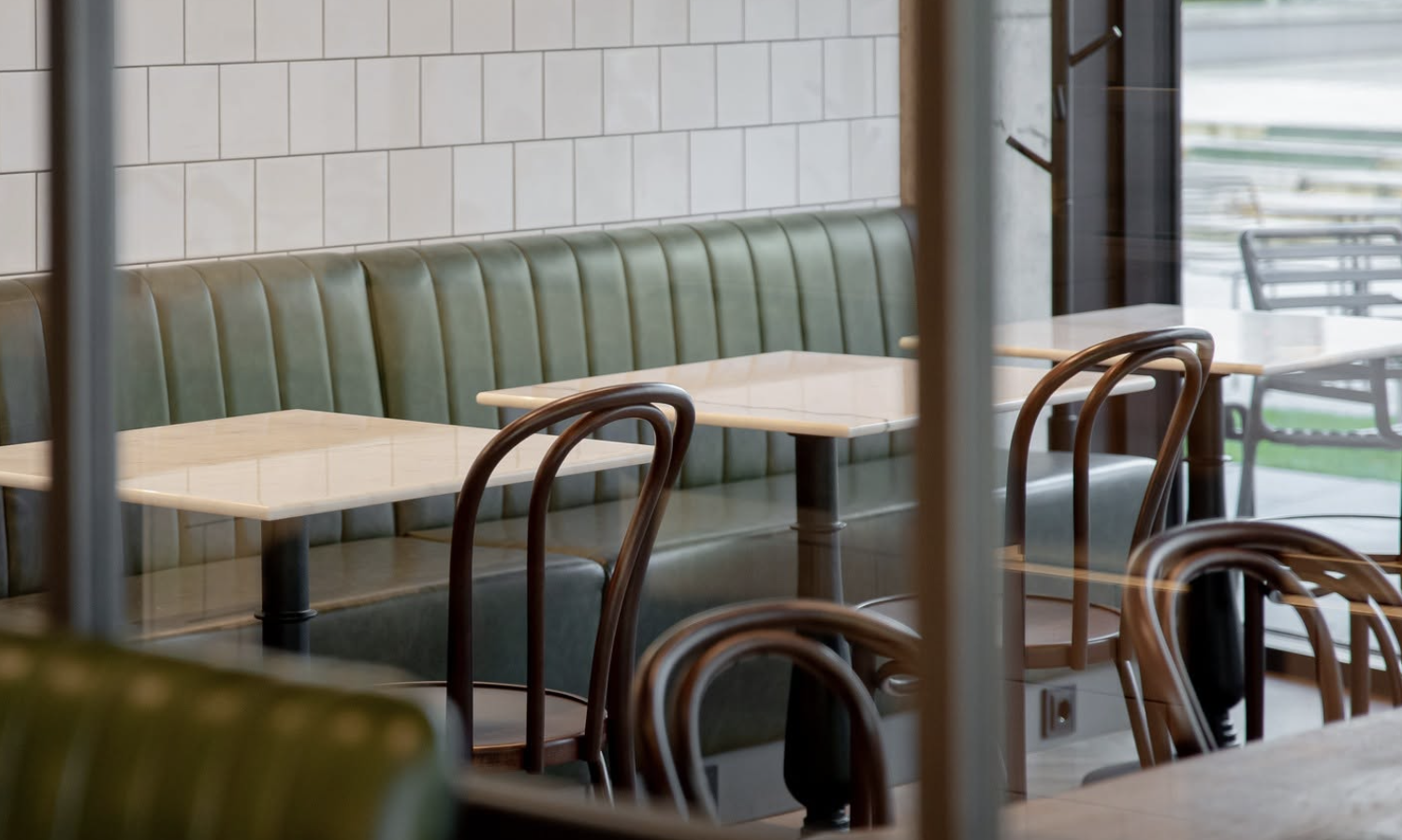
Even the most visually impressive café can become uncomfortable if customers and staff cannot move efficiently between tables.
Narrow walkways slow down service, increase the risk of collisions and reduce overall comfort, especially during busy hours.
Many café layouts attempt to maximise seating capacity. However, adding a few extra tables does not necessarily improve profitability if it negatively affects the customer experience.
Recommendation: Furniture layouts should always be planned together with circulation routes for both guests and staff. A well-designed floor plan improves operational efficiency while creating a more enjoyable dining experience.
5. Overlooking ergonomics
Guests rarely remember only the coffee or the food. They also remember how comfortable they felt while sitting.
A chair that is too low, a table with the wrong height, or poor seating posture can reduce the amount of time customers are willing to stay and often discourage repeat visits.
Poor ergonomics also affect employees. Heavy furniture and inefficient layouts make daily service slower and more physically demanding.
Recommendation: Commercial café furniture should be considered part of the business operation, not simply an interior decoration. Comfortable furniture contributes directly to customer satisfaction and a better overall guest experience.
 6. Leaving furniture decisions until the end of the project
Furniture suppliers are often involved only after the interior design has already been finalised.
At that stage, compromises become unavoidable. Dimensions may need to be adjusted, product choices become limited, budgets have to be revised or delivery schedules no longer align with the project timeline. Sometimes it also becomes clear that the selected furniture simply does not fit the available space.
Recommendation: Furniture planning should begin during the early stages of the project. Early collaboration makes it much easier to coordinate interior design, functionality, production lead times and project budget.
Conclusion
Commercial café furniture has a much greater role than simply creating an attractive interior. It directly influences customer experience, staff efficiency, maintenance costs and how well the interior maintains its appearance over many years.
This is why furniture designed for public and commercial spaces differs significantly from residential furniture. It is specifically developed for intensive use, high visitor traffic and long-term durability.
At
Bravo Projekt, we work with restaurants, cafés, hotels, offices and other public spaces, helping architects, interior designers and business owners select furniture solutions that match the interior concept, expected traffic levels, ergonomic requirements, maintenance needs and project budget.
Our experience shows that the best investment is not necessarily the most expensive furniture. It is the furniture that best fits the purpose of the space and performs reliably under everyday commercial conditions.
Go back